


Technics Apple

 Apple iPhone 18 Pro Max
 Apple iPhone 18 Pro
 Apple iPhone 17 Pro Max
 Apple iPhone 17 Pro
 Apple iPhone 17
 Apple iPhone 17 Air
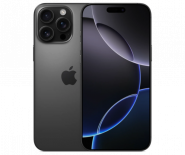 Apple iPhone 16 Pro Max
 Apple iPhone 16 Pro
 Apple iPhone 16 Plus
 Apple iPhone 16
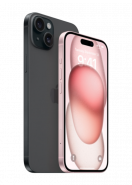 Apple iPhone 15 Plus
 Apple iPhone 15
 Apple iPhone 14 Plus
 Apple iPhone 14
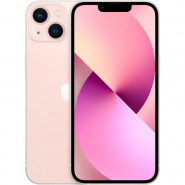 Apple iPhone 13
 Apple MacBook Pro M5
 Apple MacBook Air M5
 Apple MacBook Neo
 Apple MacBook Pro 16" M4
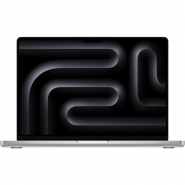 Apple MacBook Pro 14" M4
 Apple MacBook Air M4 2025
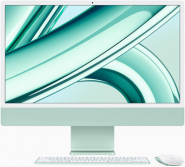 Apple iMac 24
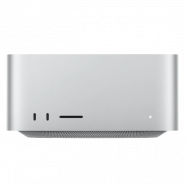 Apple Mac Studio 2026
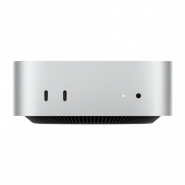 Apple Mac mini 2026
 Apple Mac mini M4 2024
 Apple Mac mini 2023
 Apple Mac Studio
 Apple iPad Pro M5 2025
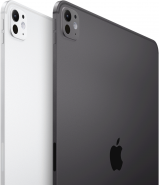 Apple iPad Pro M4 2024
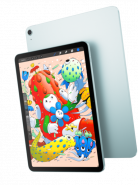 Apple iPad Air M4 2026
 Apple iPad Air M3 2025
 Apple iPad 11" 2025
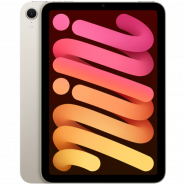 Apple iPad mini 7 2024

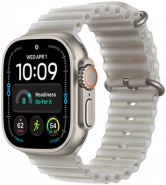 Apple Watch Ultra 4
 Apple Watch Series 12
 Apple Watch Ultra 3
 Apple Watch Series 11
 Apple Watch SE 3
 Apple Watch Series 10
 Apple Watch Ultra 2
 Apple AirPods

 Apple Display
 Apple Magic Keyboard
 Apple Magic Mouse
 Apple AirTag
 Adapters and chargers
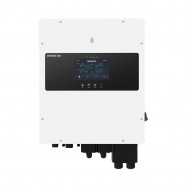 CHISAGE ESS Inverters
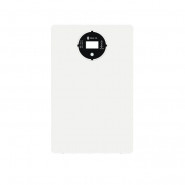 Batteries for inverters
products of different brands

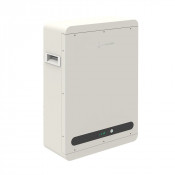
 buy
buy
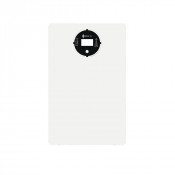 buy
buy
 buy
buy
 buy
buy
 buy
buy
 buy
buy
Batteries for inverters are a key part of a backup power system, solar power system, UPS and autonomous energy setup. The battery determines how long a house, office, shop, warehouse, server equipment, boiler, pump, lighting or other load can keep working during a power outage.
At Levite, you can choose batteries for inverters for different tasks: home backup power, hybrid solar power systems, off-grid setups, commercial sites, offices, shops, production facilities or warehouses. The category includes solutions for different power levels - from compact 12 V and 24 V batteries to 48 V / 51.2 V systems and high-voltage battery modules for powerful three-phase inverters.
Modern inverter systems most often use LiFePO4 / LFP batteries. These lithium iron phosphate batteries are well suited for daily charge and discharge cycles, solar panels, backup power and energy storage systems. Such batteries usually provide long cycle life, stable voltage, good efficiency and convenient operation with hybrid inverters compared with many traditional battery solutions.
For simple backup systems, 12 V or 24 V batteries may be used. For most home and small commercial hybrid inverters, 48 V or 51.2 V batteries are often selected. For powerful commercial and industrial sites, high-voltage battery systems are used with three-phase inverters, large solar power plants and serious loads.
LiFePO4 batteries are well suited for inverters because they are designed for frequent operating cycles. Unlike many older solutions, an LFP battery handles regular charging and discharging better, offers stable operating parameters and is suitable for systems used every day, not only for rare emergency events.
This is especially important for solar power systems. During the day, the battery can charge from solar panels, in the evening it can supply the load, and during outages it can support site power. In a hybrid system, the battery works together with solar panels, the inverter, the grid and sometimes a generator.
One of the most important parts of a modern lithium battery is the BMS. The battery management system controls cell voltage, temperature, charge, discharge, balancing and protection. For an inverter, it is not enough to connect the battery by voltage only - operating modes, currents, communication protocol and charge parameters must also be coordinated correctly.
Before buying a battery for an inverter, it is necessary to check operating voltage, allowed charge and discharge current, battery type in inverter settings, BMS communication support, depth of discharge, temperature range and the manufacturer's connection requirements. A battery must not be selected only by Ah or kWh capacity - safe operation depends on the full combination of inverter + battery + protection + cables + load.
The battery voltage must match the inverter. Small backup systems may use 12 V and 24 V solutions. More serious home systems, hybrid inverters and solar power systems often use 48 V or 51.2 V batteries. This is a popular format for private houses, offices, shops and small businesses.
High-voltage batteries are used in commercial and industrial systems. These solutions can operate with powerful three-phase inverters, large solar arrays, several battery modules and heavy loads. HV systems require especially careful design, correct BMS, protective equipment and professional installation.
To buy a battery for an inverter without mistakes, the task must be clear first: what will be powered, how many hours the system must operate, whether solar panels are present, whether a generator will be used, what the inverter power is and which load will be connected continuously.
Battery capacity must be selected according to the real load. For example, if a site consumes a lot of energy at night, the battery must have enough kWh reserve. If the system only needs to support a router, lighting and a boiler, the requirements are different. If it must power refrigerators, pumps, servers, cash register equipment or production equipment, the requirements become much higher.
It is important to consider not only total capacity, but also allowed discharge power. A battery can have a large capacity but still be unsuitable for a high load current. That is why inverter systems must always be checked as a full combination: inverter power, battery capacity, maximum discharge current, charge current, cable, breakers, fuses and BMS settings.
In a solar power system, the battery helps store excess daytime generation and use it in the evening, at night or during grid outages. This is especially useful for hybrid systems where energy can come from solar panels, the grid, the battery and a generator.
For solar systems, solar panel power, battery capacity and inverter charge current must be coordinated correctly. A battery that is too small fills quickly and discharges quickly. A battery that is too large can be economically inefficient if the solar panels or charge current cannot charge it effectively. Therefore, a solar battery should be selected together with the inverter and load calculation, not separately.
Batteries for UPS and backup power are used where equipment must continue operating during outages. This can include a router, video surveillance system, server, cash register, alarm system, gate automation, boiler equipment, pump group or workplace.
For such tasks, reliability, clear backup runtime, stable current output and proper protection are important. LiFePO4 / LFP batteries are often selected because they are suitable for regular use, not only for rare emergency activation.
Batteries for inverters are electrical equipment. Incorrect selection of voltage, cable, circuit breaker, fuse or wiring scheme can damage the inverter, battery and connected load. High-voltage battery systems require special care.
Installation must consider operating voltage, charge and discharge currents, cable cross-section, line length, short-circuit protection, grounding, ventilation, temperature, service access and manufacturer requirements. For powerful systems and HV solutions, installation must be performed by a qualified specialist.
At Levite, you can buy a battery for an inverter for a specific task, not only by name or capacity. We help choose a battery according to inverter power, load type, system voltage, BMS, solar panels, backup power needs and desired autonomous runtime.
If you need to buy a battery for an inverter at Levite, it is better to know the inverter power, which devices will be connected, how many hours the system must operate and whether solar panels are planned. This makes it easier to choose a battery without unsafe mismatch and without overpaying for capacity that will not be used effectively.
Inverter batteries at Levite include a 2-year warranty. This is important for backup power and solar power systems, where the battery is not just an accessory, but one of the key parts of safety, autonomy and stable power supply.
The inverter battery category at Levite is suitable for selecting solutions for homes, offices, shops, warehouses, solar power systems, UPS, backup power and off-grid setups. Manufacturers are better selected through filters, while technical compatibility should be checked by inverter, battery and real load parameters.
 Наушники
 Charging stations
 Drones
 Dyson
Dyson